Computational Marine Biology

Matthew S. Woodstock

Quantitative ecosystem modeler, from individual animals to whole ecosystems

I build data-driven ecosystem models, from Gulf-wide Ecopath with Ecosim and Ecospace models to the agent-based model SwimmingIndividuals, that connect the behavior of individual animals to ecosystem-scale change and inform stock assessment, restoration, and spatial planning.

Assistant Scientist · CIMAS, University of Miami  ·  NOAA Southeast Fisheries Science Center
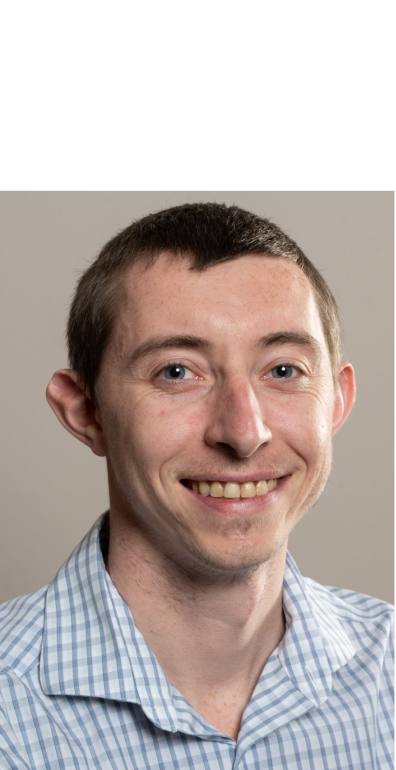
Matthew S. Woodstock
20+ articles
Peer-reviewed & technical
3 open-source tools
Julia & R modeling software
Associate Editor
Food Webs
About

Modeling the ocean, one individual at a time

I am a computational marine biologist and an Assistant Scientist at the University of Miami Cooperative Institute for Marine and Atmospheric Studies, working with the NOAA Southeast Fisheries Science Center. My research spans large-scale ecosystem models that reveal system-level patterns and individual-based models that recover the mechanisms behind them, and it puts both to work for management, from Gulf of America stock assessments to habitat restoration in the Chesapeake Bay and Florida.

I develop open-source scientific software, serve as an Associate Editor at Food Webs, and lead funded research as Principal Investigator through the Deepwater Horizon Open Ocean Trustees, NCEAS, and the Woods Hole Oceanographic Institution.

Education
  • Ph.D., Biological Sciences
    Florida International University · 2022 · Advisor: Yuying Zhang
  • M.Sc., Marine Science
    Nova Southeastern University · 2018 · Advisor: Tracey Sutton
  • B.Sc., Ecology, Evolution & Behavioral Biology
    Beloit College · 2015
Research program

Three connected themes

Large-scale models reveal the patterns, individual-based models recover the mechanisms behind them, and together they support applied decisions.

Software & data products

Open-source tools

SwimmingIndividuals

High-performance agent-based model for marine ecosystems, simulating metabolic and behavioral trajectories of millions of individuals on hybrid GPU–CPU hardware.

EcospaceCal

An R framework that automates the calibration of Ecopath with Ecosim and Ecospace models using modern optimization techniques.

EwECaps

An R package that computes ecosystem caps from Ecopath with Ecosim and Ecospace output to estimate maximum sustainable yields.

Selected publications

Recent work

A selection of recent peer-reviewed articles and technical reports. Full list on Google Scholar

Peer-reviewed articles

  • Woodstock, M.S., J.J. Kiszka, P.G.H. Evans, J.J. Waggitt, Y. Zhang (2025). Marine mammal and seabird population changes have limited impacts on fisheries catches in the North Sea. Canadian Journal of Fisheries and Aquatic Sciences. doi
  • Woodstock, M.S., H.E. Harris (2025). Ecosystem models can predict the consequences of conservation management decisions. Ecology Letters. doi
  • Ferone, G., M.S. Woodstock, A. Hearn (2025). Random swims: an evaluation of acoustic telemetry thresholds for reef-shark behavior and residency. Animal Biotelemetry. doi
  • Woodstock, M.S., A.T. Bevans, M. Sulyman, J. Maples, S. Knoche, T.F. Ihde (2024). The economic impacts of living habitat change in the Virginia Middle Peninsula, Chesapeake Bay. Ecological Modelling. doi
  • Martin, A.P., et al., incl. M.S. Woodstock (2024). When to add a new process to a model, and when not: a marine biogeochemical perspective. Ecological Modelling. doi
  • Woodstock, M.S., J.J. Kiszka, M.R. Ramírez-León, T.T. Sutton, K. Fennel, B. Wang, Y. Zhang (2023). Cetacean-mediated vertical nitrogen transport in the oceanic Gulf of Mexico. Limnology and Oceanography. doi L&O Bulletin

Technical reports

  • Harris, H.E., S.R. Sagarese, M.S. Woodstock, D.D. Chagaris (2026). A U.S. Gulf-wide Ecopath with Ecosim and Ecospace model for the continental shelf incorporating spatial-temporal environmental drivers. NOAA Technical Memorandum NMFS-SEFSC-797. doi
  • Woodstock, M.S., S.R. Sagarese (2026). SEDAR 99-WP-05: Evaluating environmental and trophic drivers of Gulf of America King Mackerel using a spatially explicit ecosystem model. Working Paper, SEDAR 99 King Mackerel stock assessment.

In review

  • Woodstock, M.S., J.P. Mattern, Z. Wu, G.L. Britten (in review). SwimmingIndividuals: a high-performance agent-based model for marine ecosystems. PLOS Computational Biology.
  • Woodstock, M.S., J.S. Bigman (in review). The scaling discrepancy between population consumption (Q/B) and individual daily ration. Ecological Modelling.